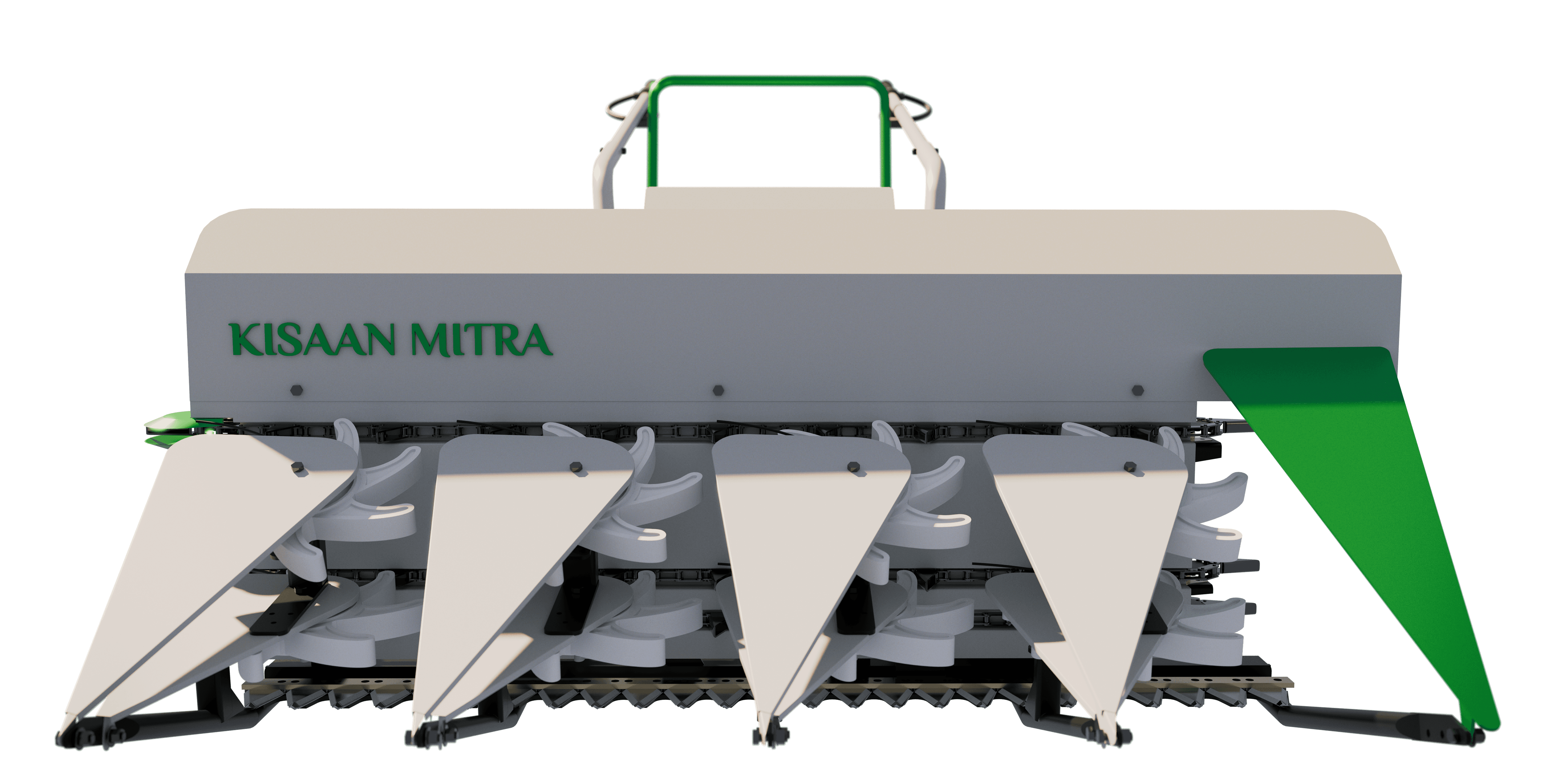
Before Kisaan Mittra was an application, it began with the development of an electric reaper designed for small-scale farmers as a more efficient alternative to traditional machinery.
However, building the machine exposed a key challenge. Farmers had no structured way to access or book such equipment, relying instead on manual coordination with operators.
As a result, even an efficient machine could not be utilized effectively. This led to the need for a digital platform to connect farmers with available machinery and provide visibility throughout the harvesting process.
Kisaan Mittra is a mobile platform that enables farmers to book and track harvesting services in a structured and transparent way.
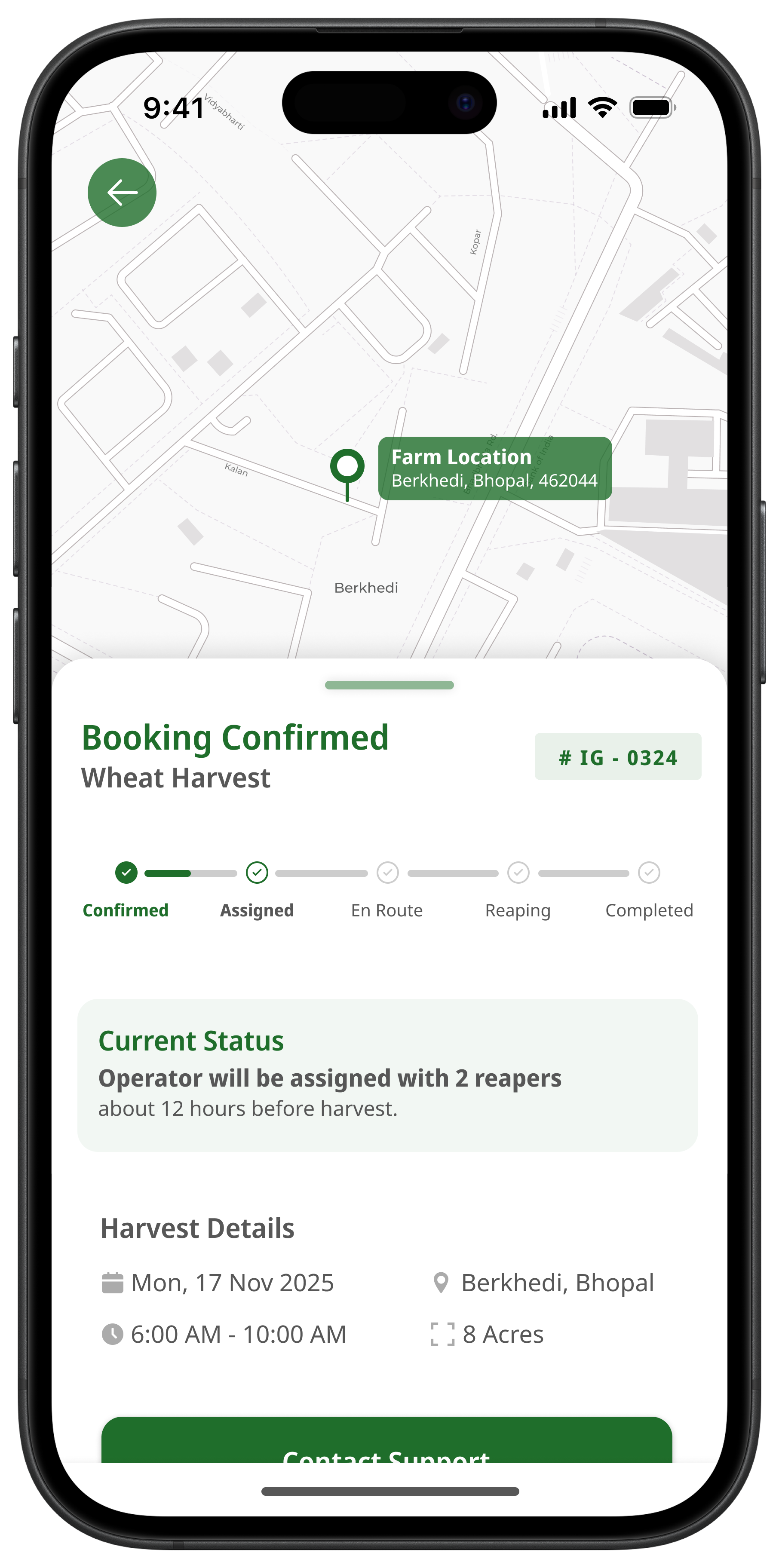
The system connects farmers with electric reaper operators, allowing them to schedule services, monitor assignment, track arrival, and follow harvesting progress in real time.
Timeline
Defined the service flow, designed the interface, and built the final prototype within 5 weeks.
Background
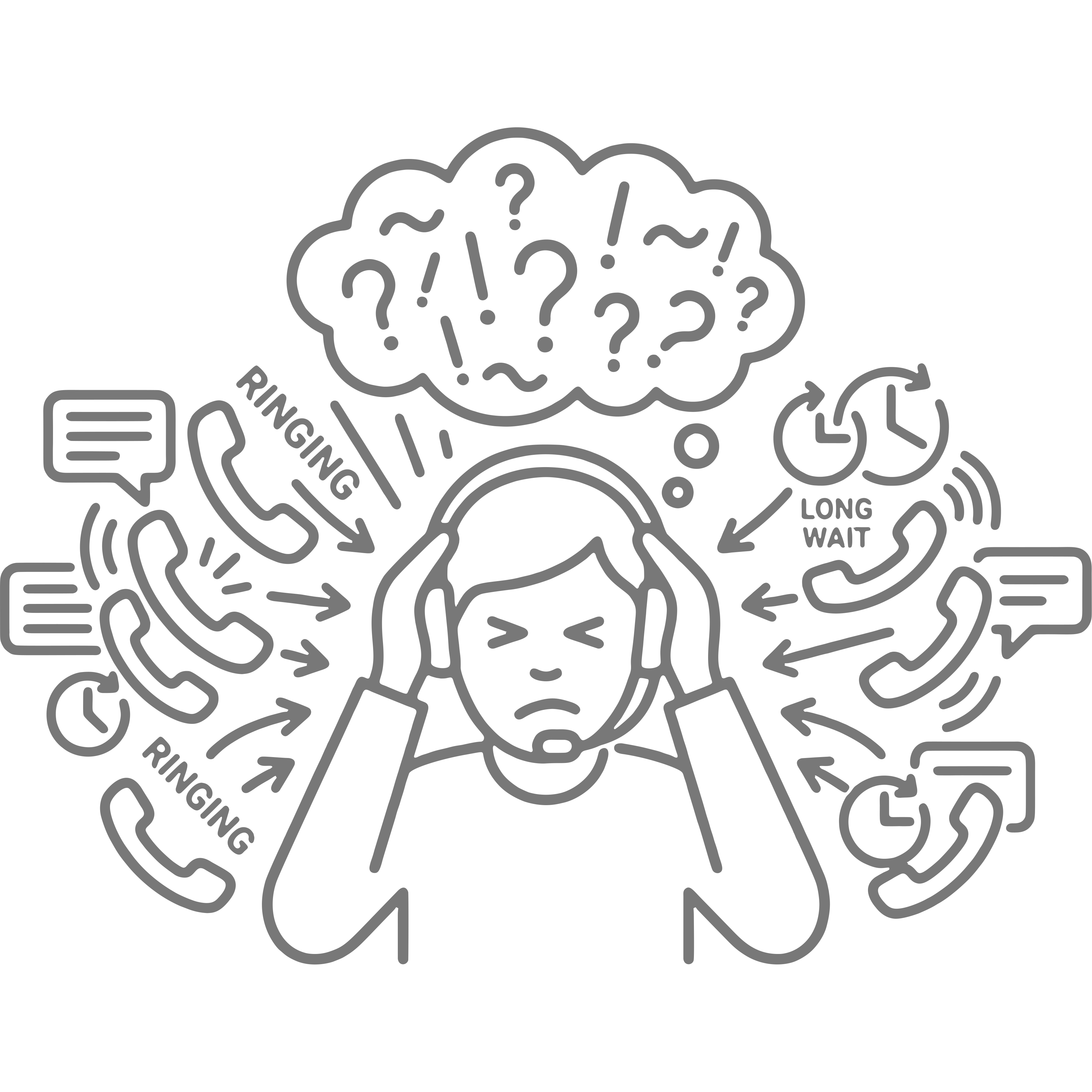
Small-scale farmers often rely on external operators for harvesting, as owning machinery is expensive and large harvesters are not always accessible. Mid-scale solutions like reapers offer a more viable option, but access to them depends on manual coordination through phone calls and informal networks. This lack of a structured system makes it difficult to reliably book and manage harvesting services.
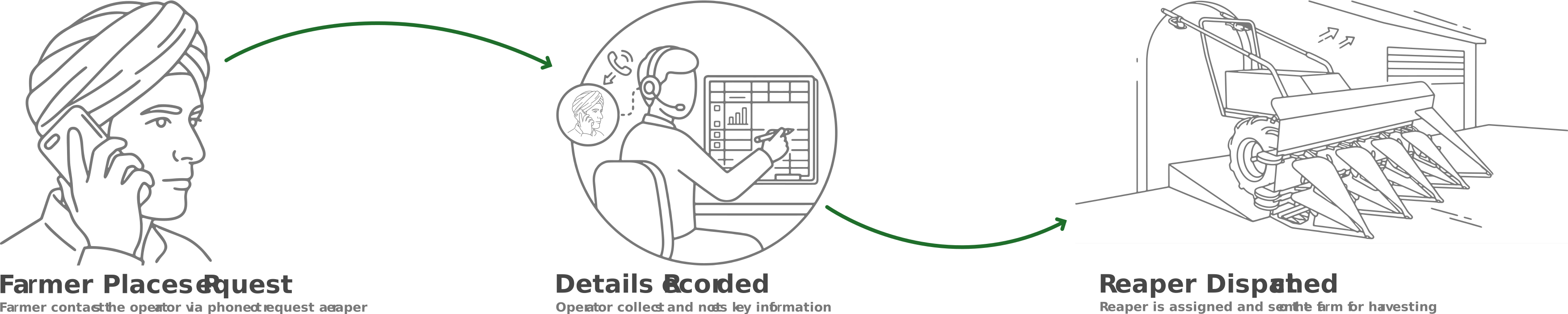
Despite its simplicity,
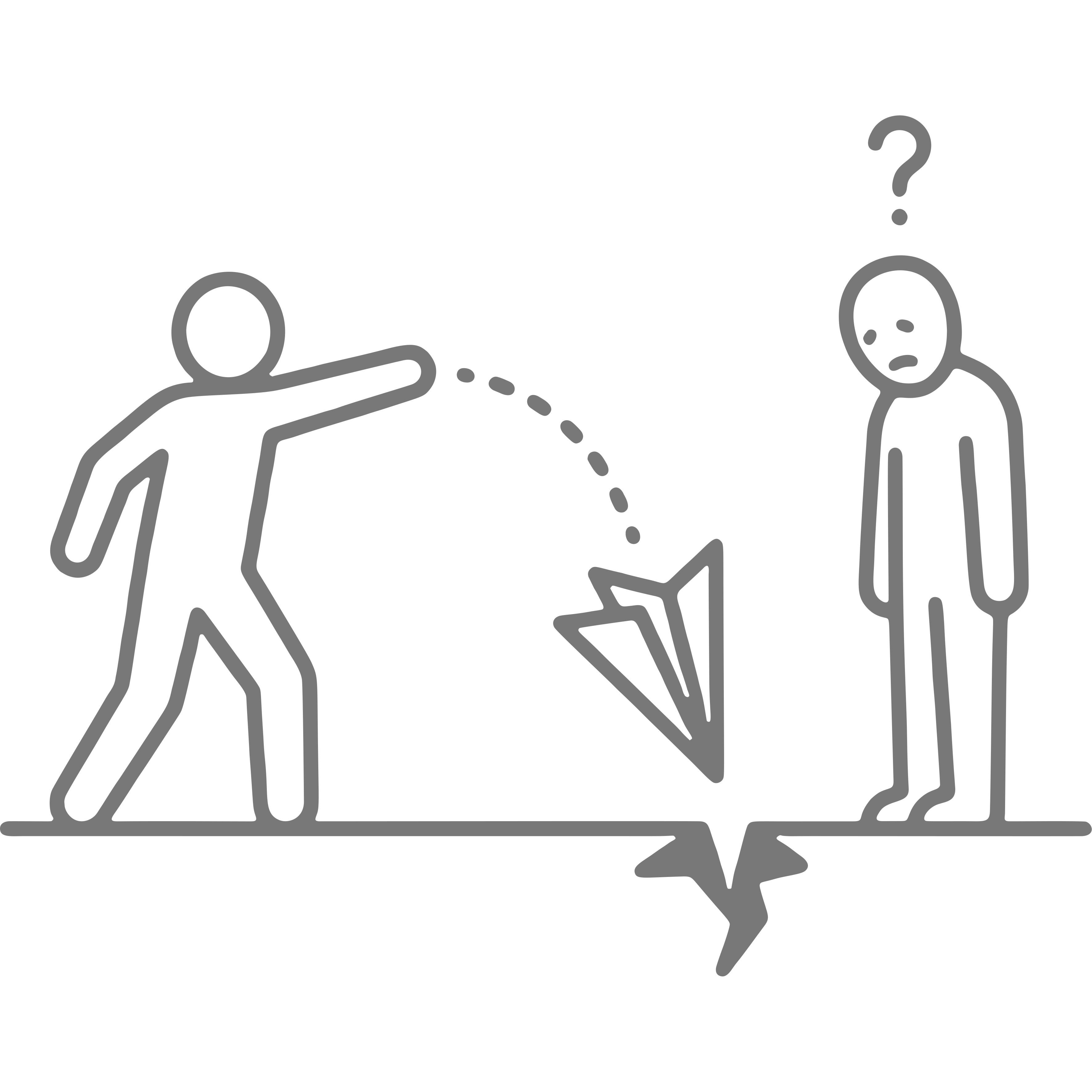
The process fails at multiple critical points.





Field Officer
Coordinating On Ground Operations
- Assigns operators to confirmed bookings
- Depends on accurate booking data
- Coordinates operations without modifying inputs
- Monitors job progress and completion

Operator
Executing the Harvest
- Carries out harvesting on site
- Requires clear and structured job details
- Responsible for completing and closing the job
- Reports field conditions and issues
"Every idle machine is a booking that never reached the system"
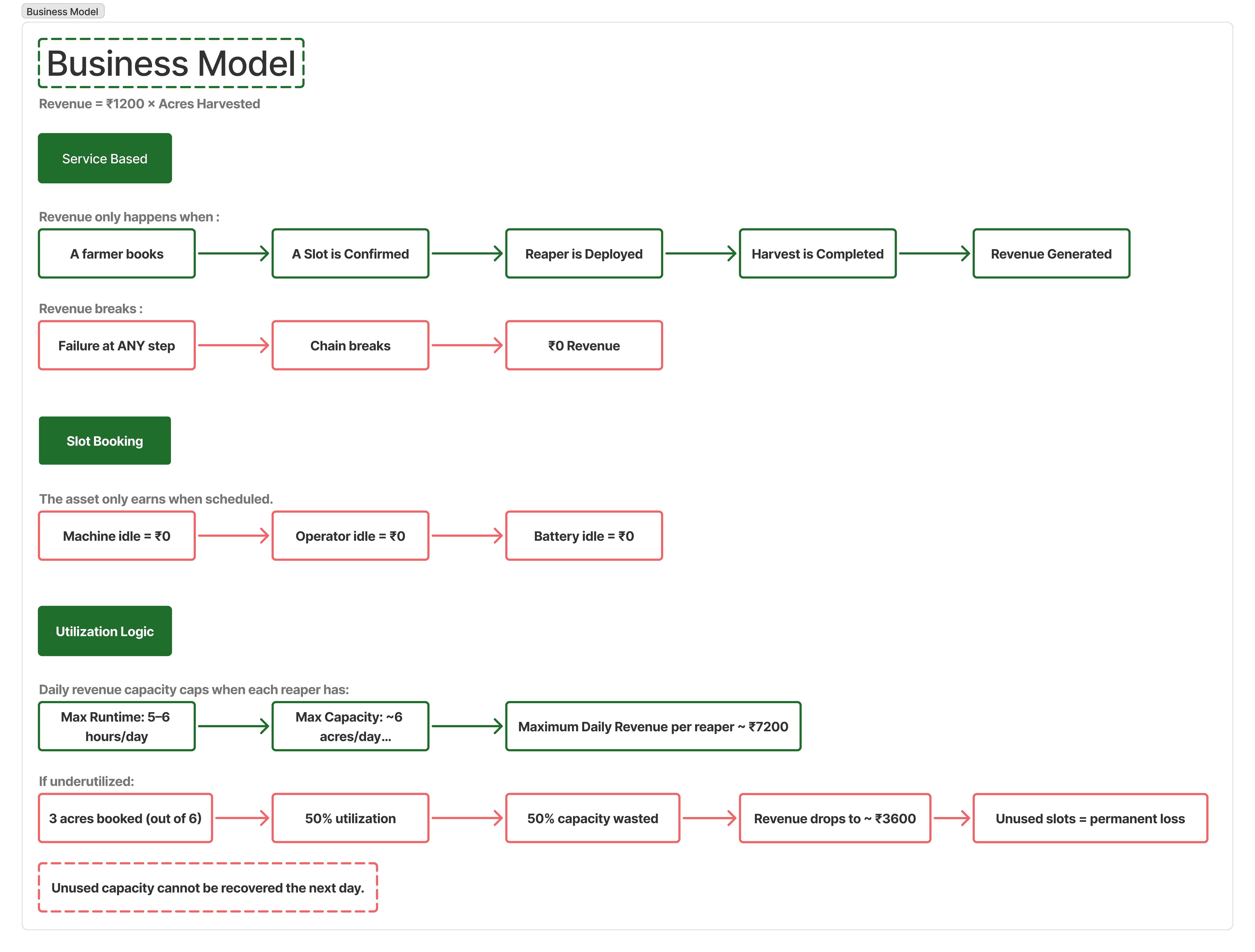
Revenue is only generated when the entire chain from booking to harvest is successfully completed. With fixed daily capacity, any missed or underutilized slot results in permanent revenue loss.
Insight 1
Revenue depends on complete execution
Insight 2
Capacity is fixed per day
Insight 3
Unused slots create irreversible loss
Insight 4
Booking efficiency controls utilization
"A system that replaces twenty minutes of coordination"
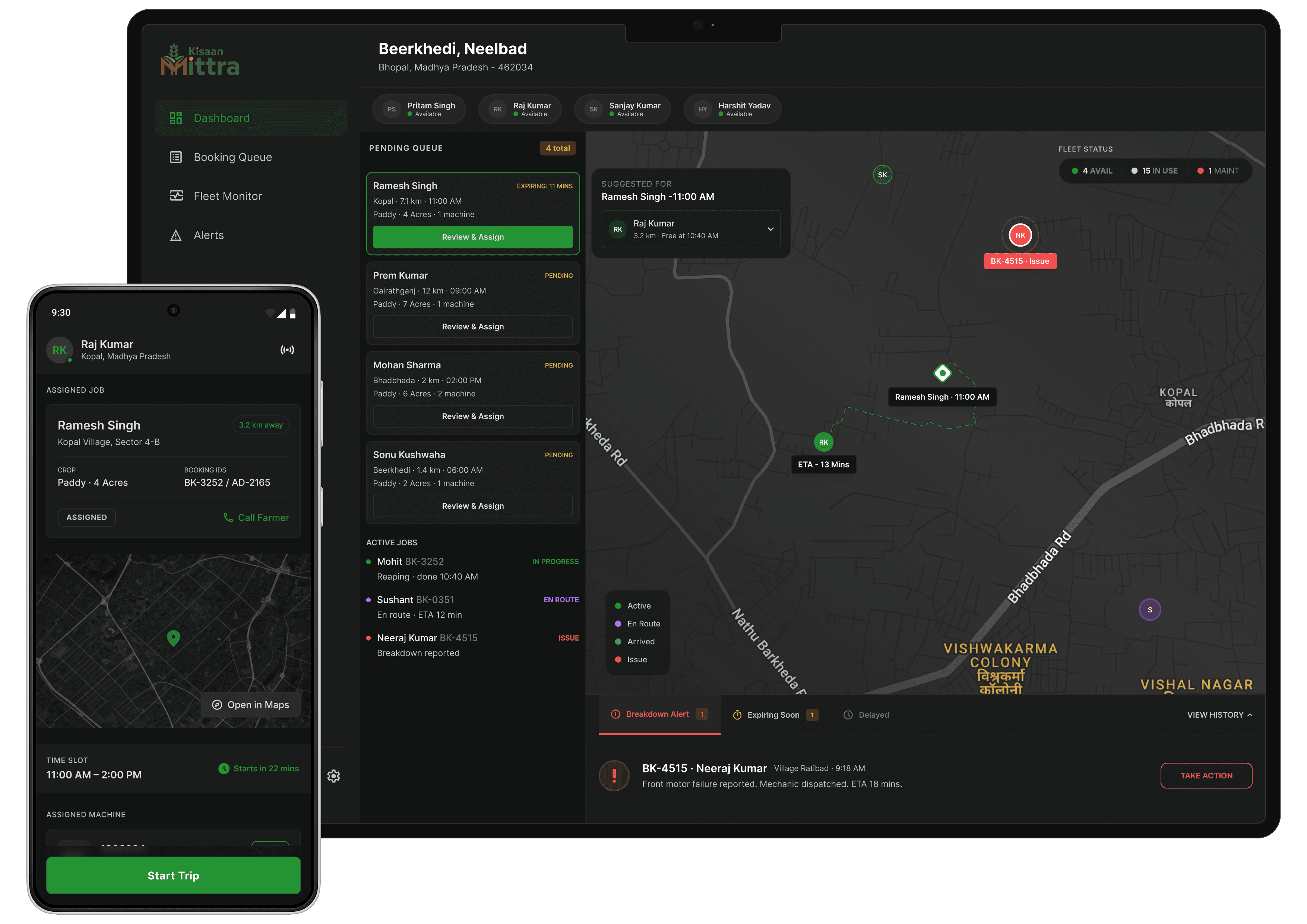
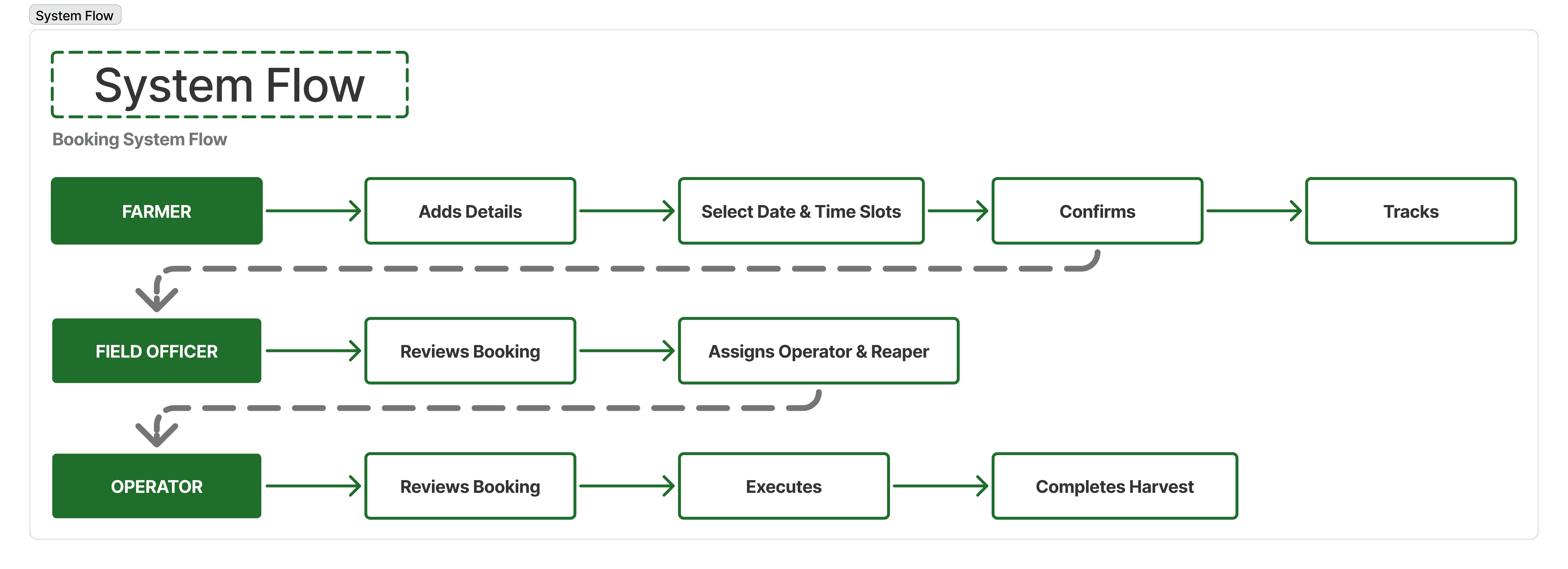
When a farmer confirms a booking, it immediately triggers a structured workflow across the entire operation. The field officer reviews and assigns the right operator and machine, while the operator receives complete job details before reaching the field. At every stage, the same data moves forward unchanged, no phone calls, no reinterpretation, no information lost in handoff.
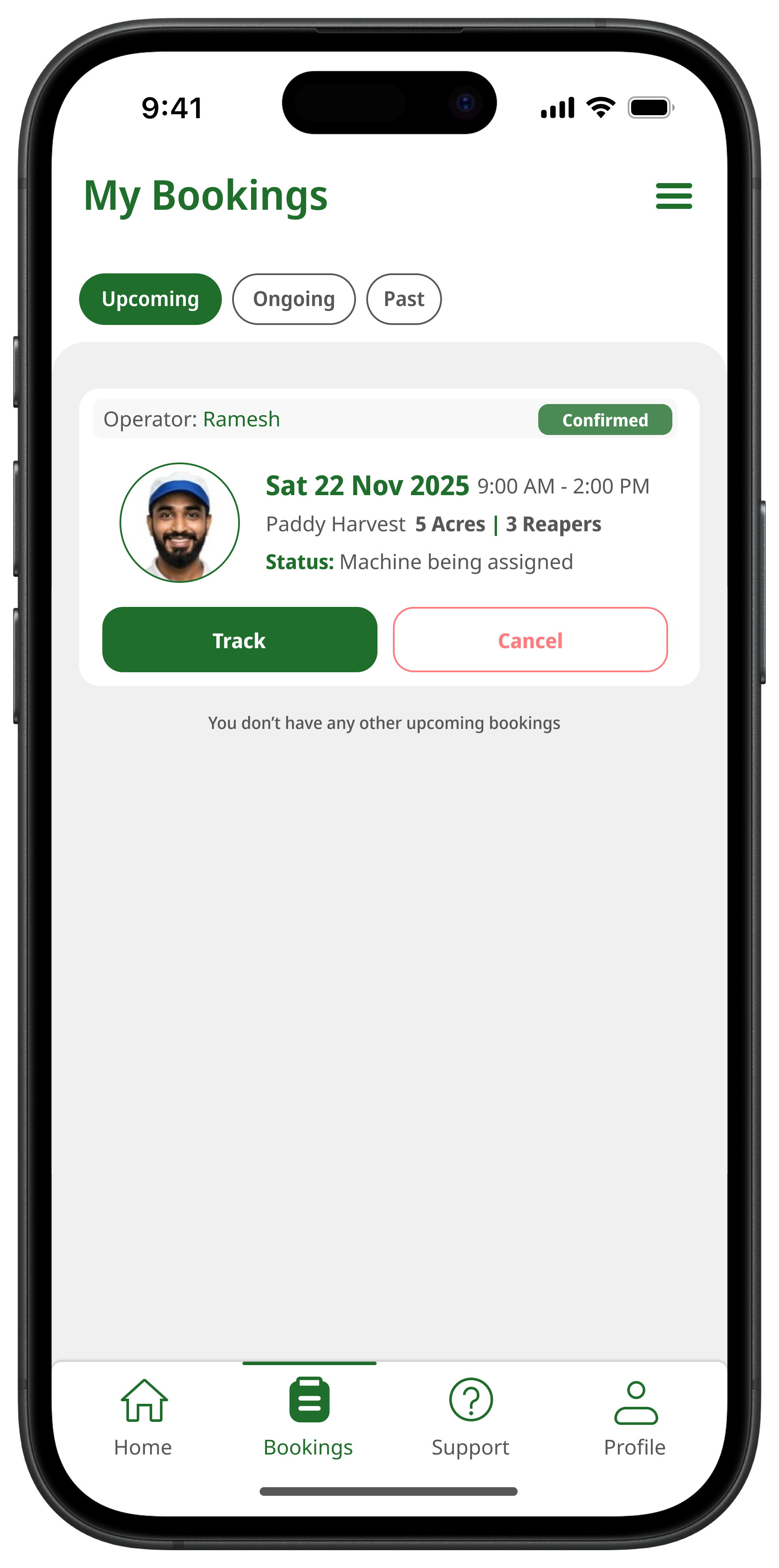
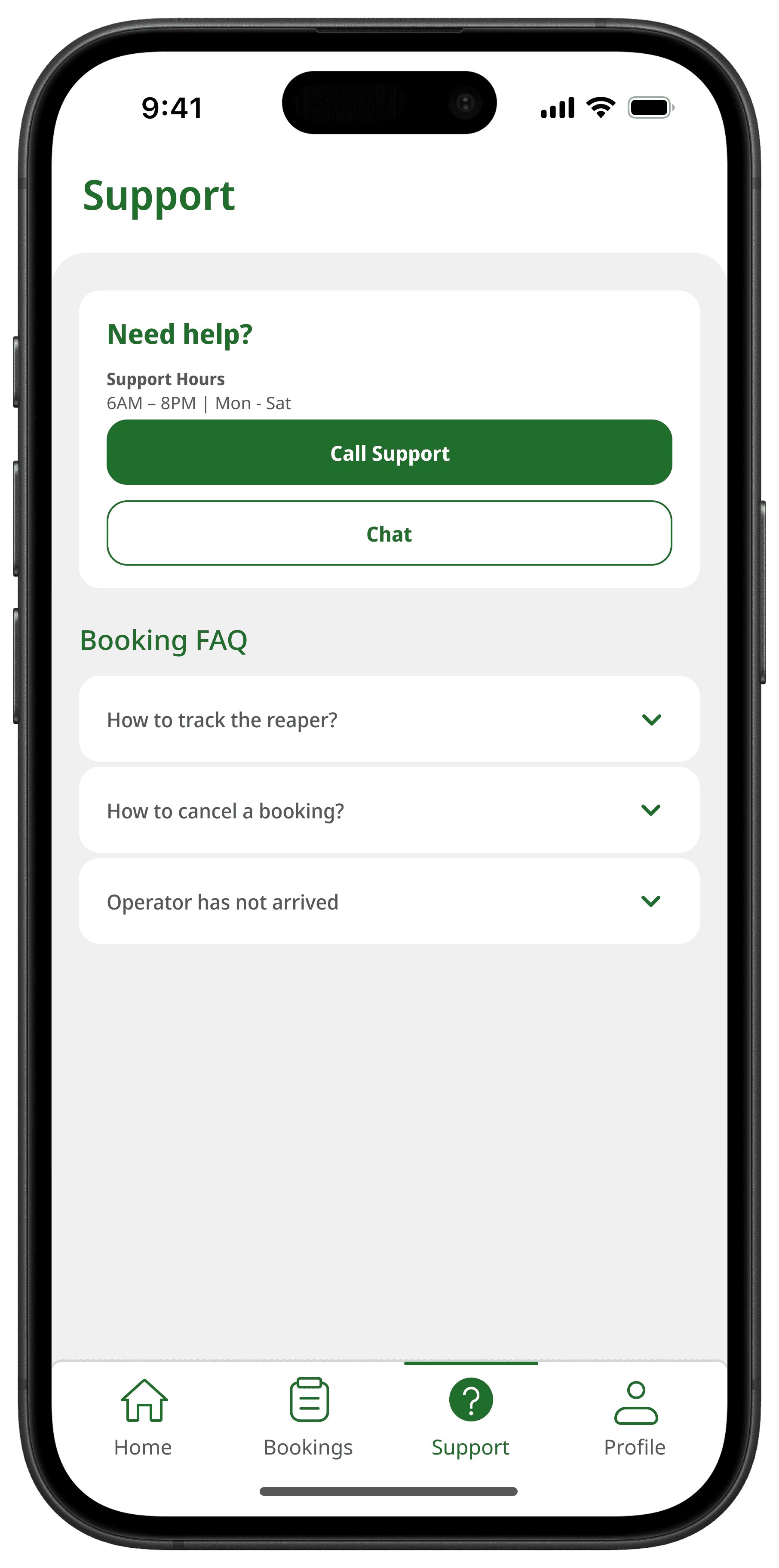
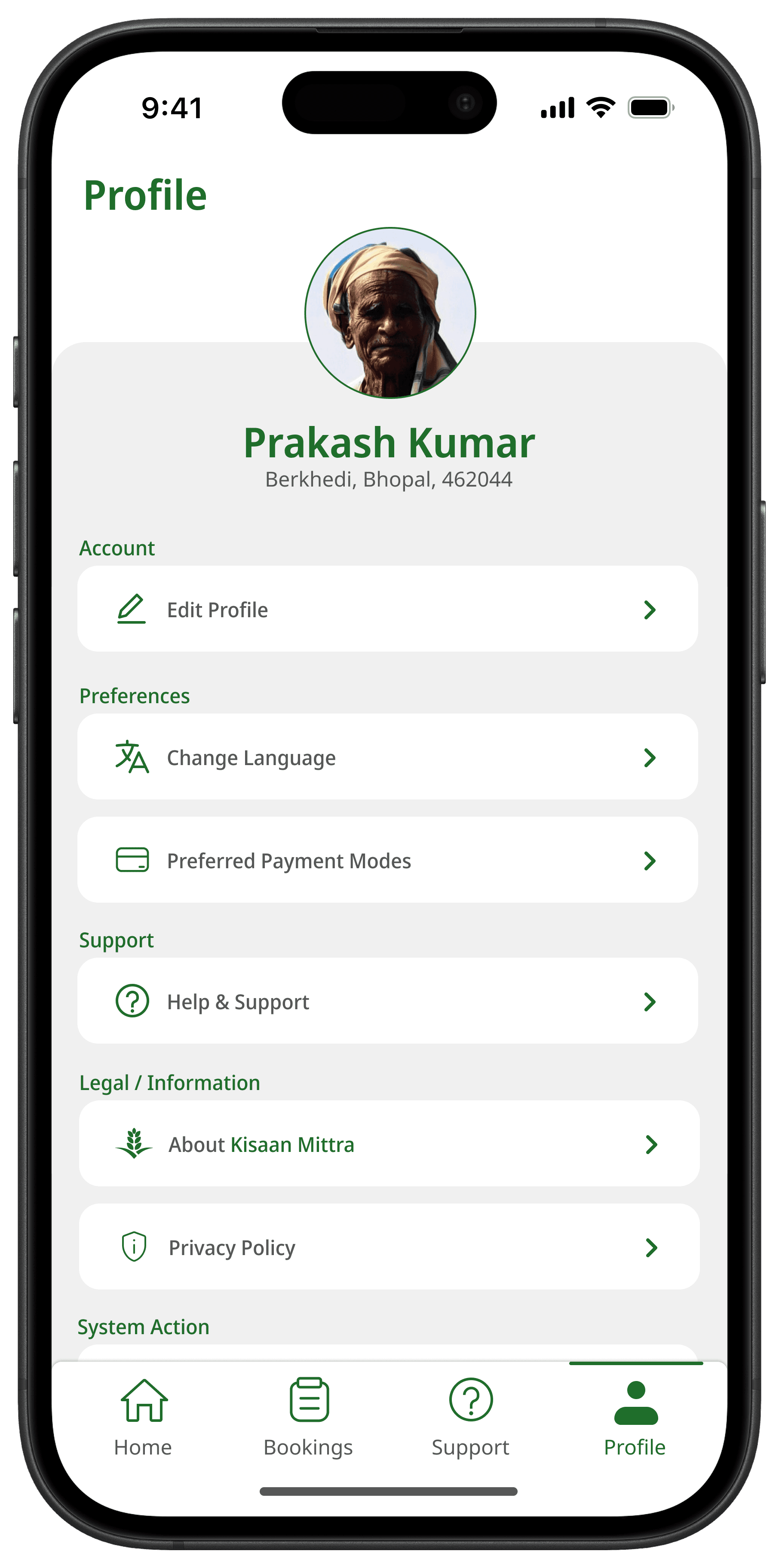
The product is structured into four key phases, Onboarding, Booking Flow, Live Tracking, and Booking Management. Each phase simplifies a specific part of the journey, enabling farmers to move from request to harvest completion through a clear, guided flow.
"A structured journey that turns complex coordination into a simple, guided experience"
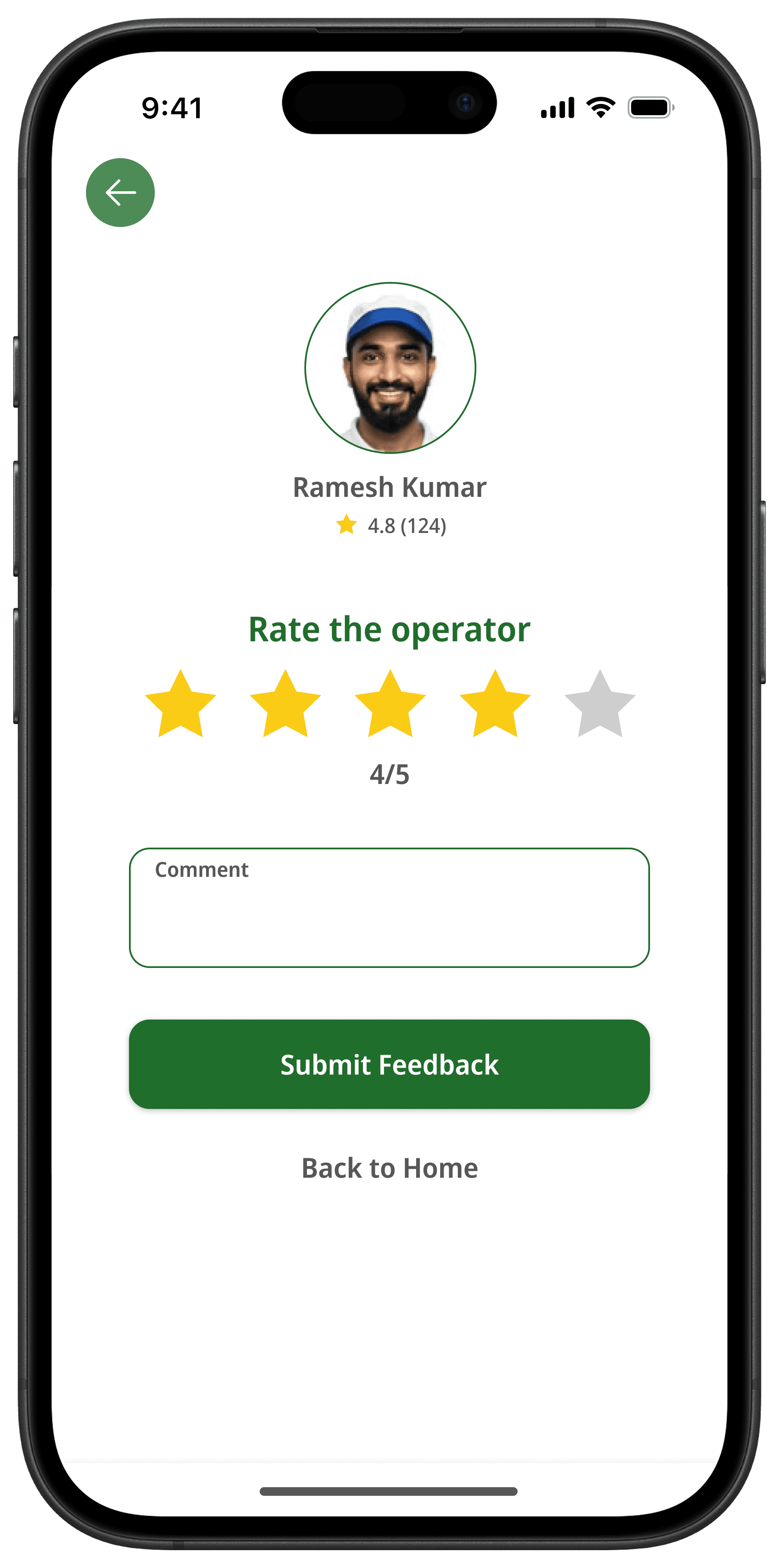
Edge Cases
Handling disruptions
Maintaining flow across failures, constraints, and limitations
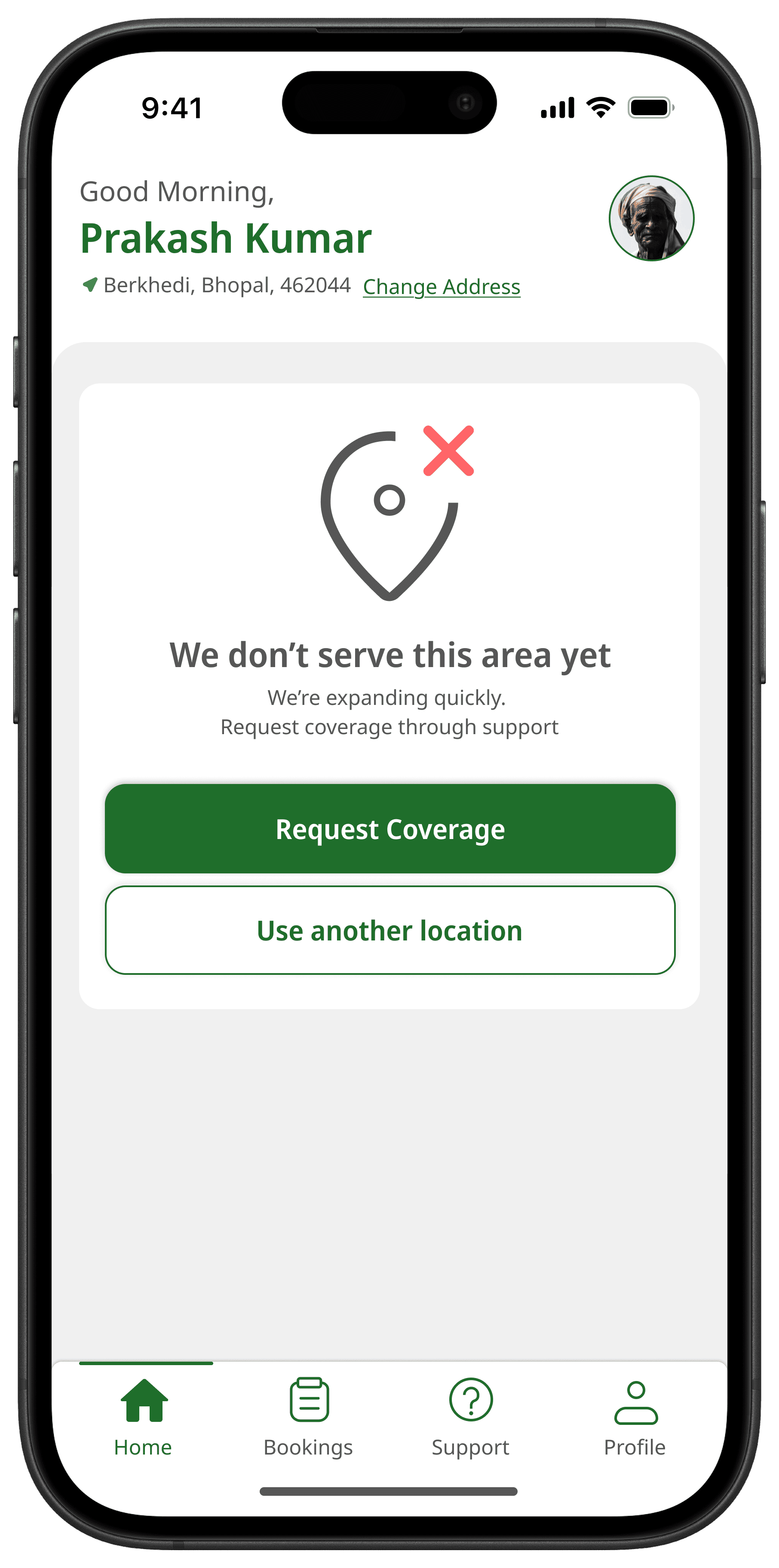
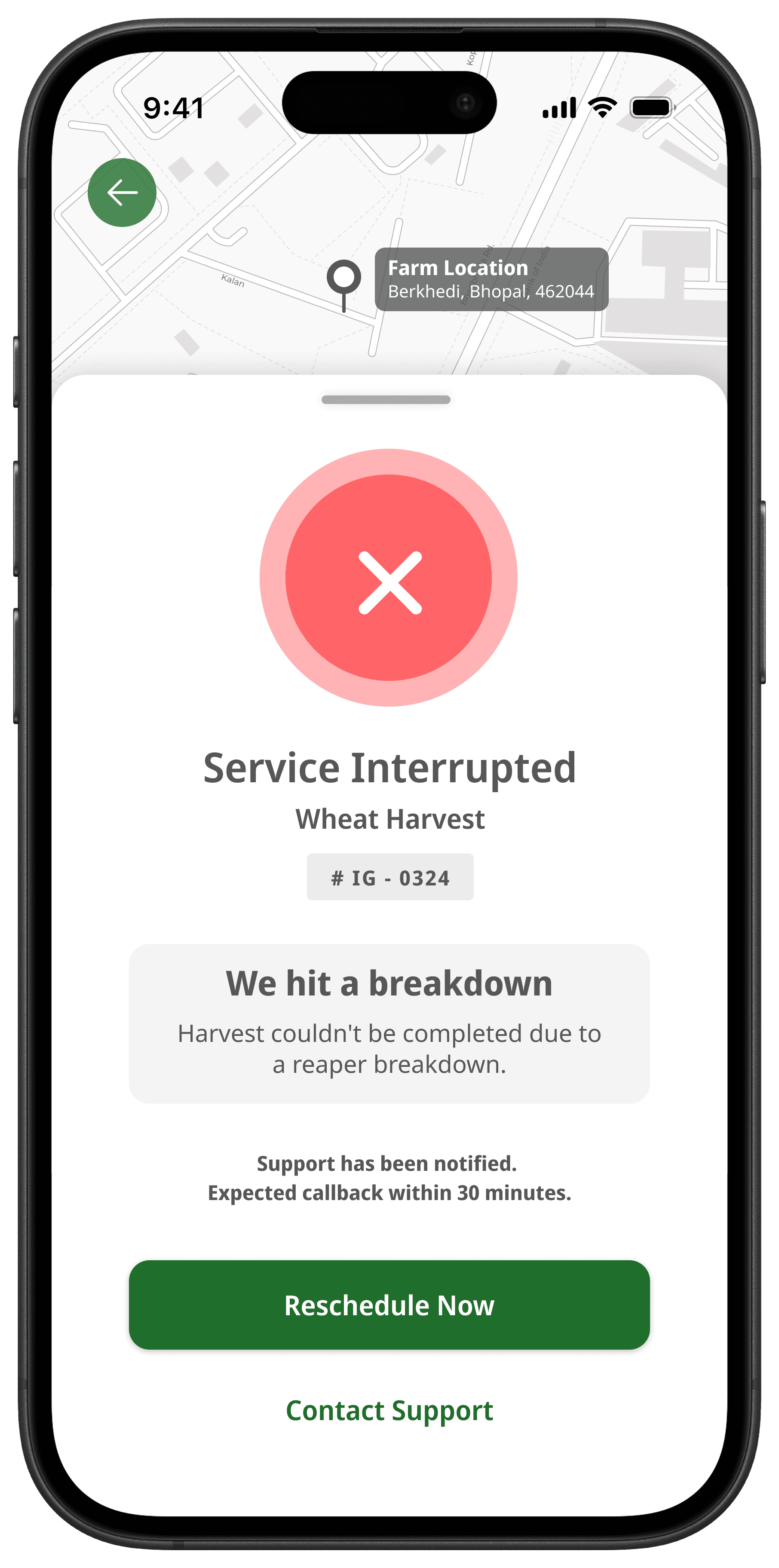
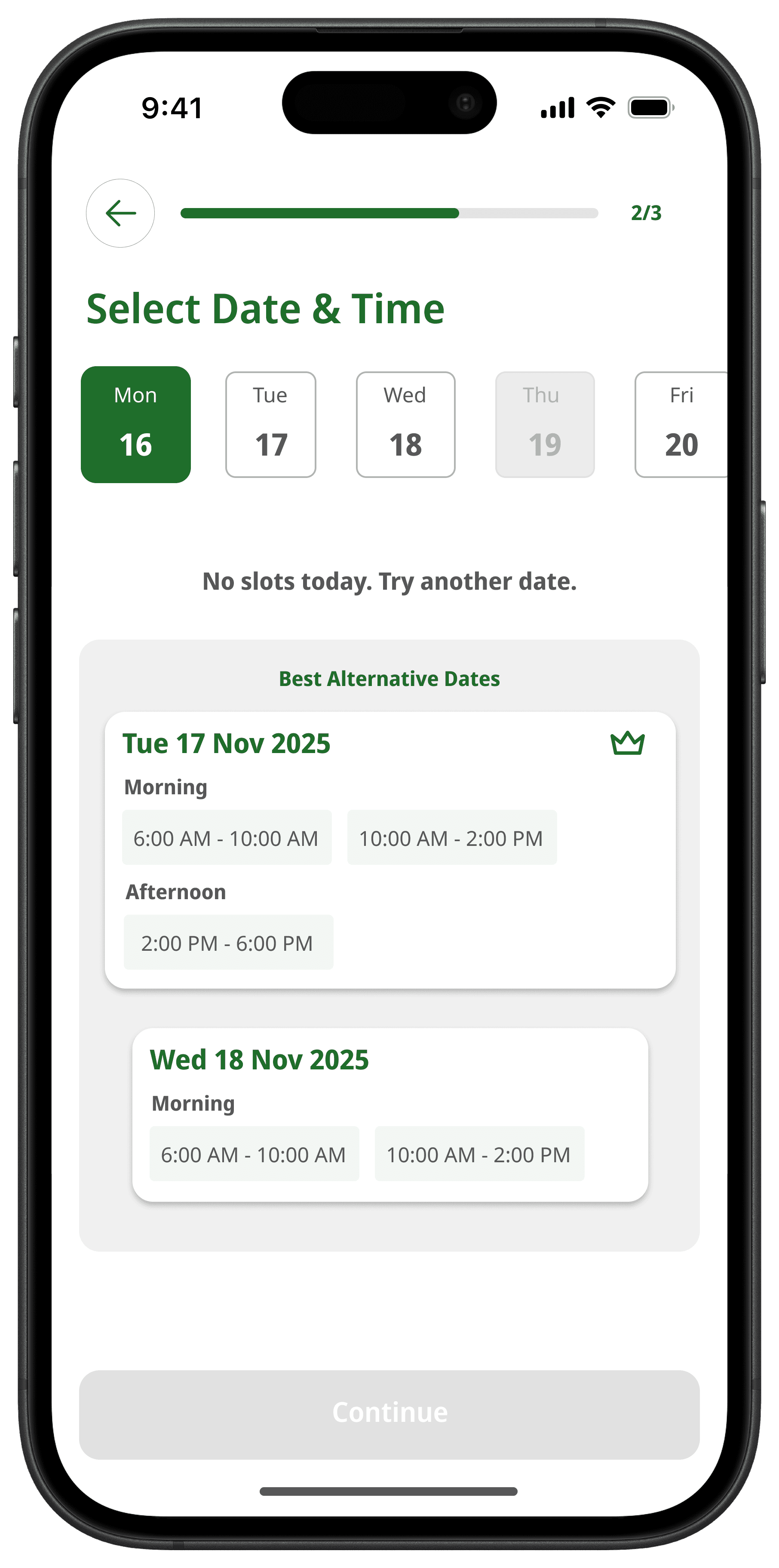
"The system absorbs failure, not the user."
Challenges & Learnings
The constraints, trade offs, and decisions that shaped how the system actually works.
Translating an unstructured process into a system
We chose fixed structured inputs over flexible conversation to make the system scalable, not just usable
Calls allowed back and forth clarification structured forms don't. We had to decide how much flexibility to sacrifice.
Some farmers find the fixed inputs rigid, but every booking now produces clean, consistent data that moves through the system without manual interpretation.

Designing for low digital literacy
We chose guided single action steps over feature rich screens to reduce errors, not just improve aesthetics
We could have packed more information per screen to reduce total steps. Instead we stripped each screen to one decision.
Longer flow, but near zero input errors from first time users who'd never used a booking app before.

Designing for low-connectivity environments
We chose SMS over offline caching to prioritize farmer trust over technical elegance
Offline first caching was more accurate but required dev complexity that would delay launch. Farmers already trusted SMS and had familiarity with it.
Inconsistent in app experience on poor networks, but guaranteed delivery of the one thing that mattered, booking confirmation.
Designing for continuity
We chose system owned recovery over user initiated retry to keep farmers out of dead ends
When a breakdown or delay occurs, we could have surfaced an error and asked the user to try again. Instead the system takes ownership offering rescheduling and support automatically.
Less user control, but significantly less abandonment when things go wrong.

Balancing system automation with user control
We chose visible status over silent automation to build trust without adding friction
Full automation would mean fewer taps. But farmers needed to see what was happening to trust the system especially first time users handing off a high stakes task.
More confirmations and status screens than a fully automated flow, but measurably higher completion rates during testing.

Structuring complex booking variables
We chose guided inputs with smart defaults over open fields to reduce cognitive load at the most critical step
Open fields are flexible but created hesitation farmers weren't sure what format to use or what was "correct." We replaced them with constrained inputs and auto calculated suggestions
Less flexibility for edge cases, but faster and more confident decision making for the majority.
"The most important decisions extended beyond screens into system behavior, ensuring the product works just as reliably when things go wrong as when they don’t."
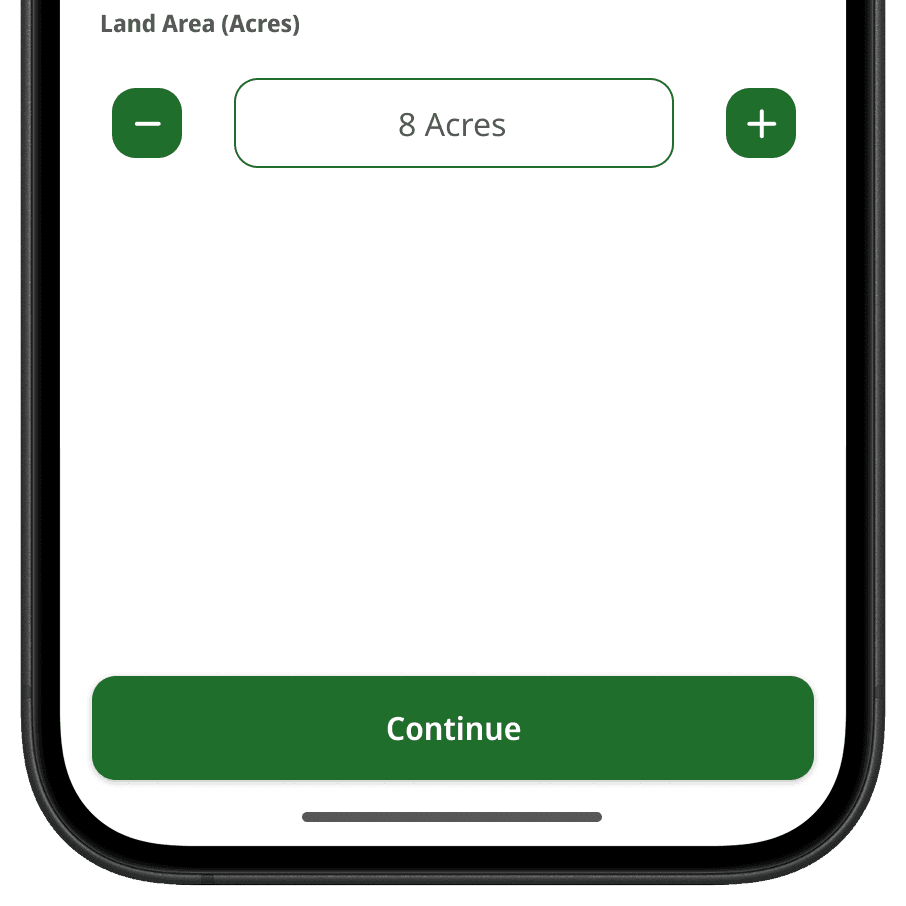
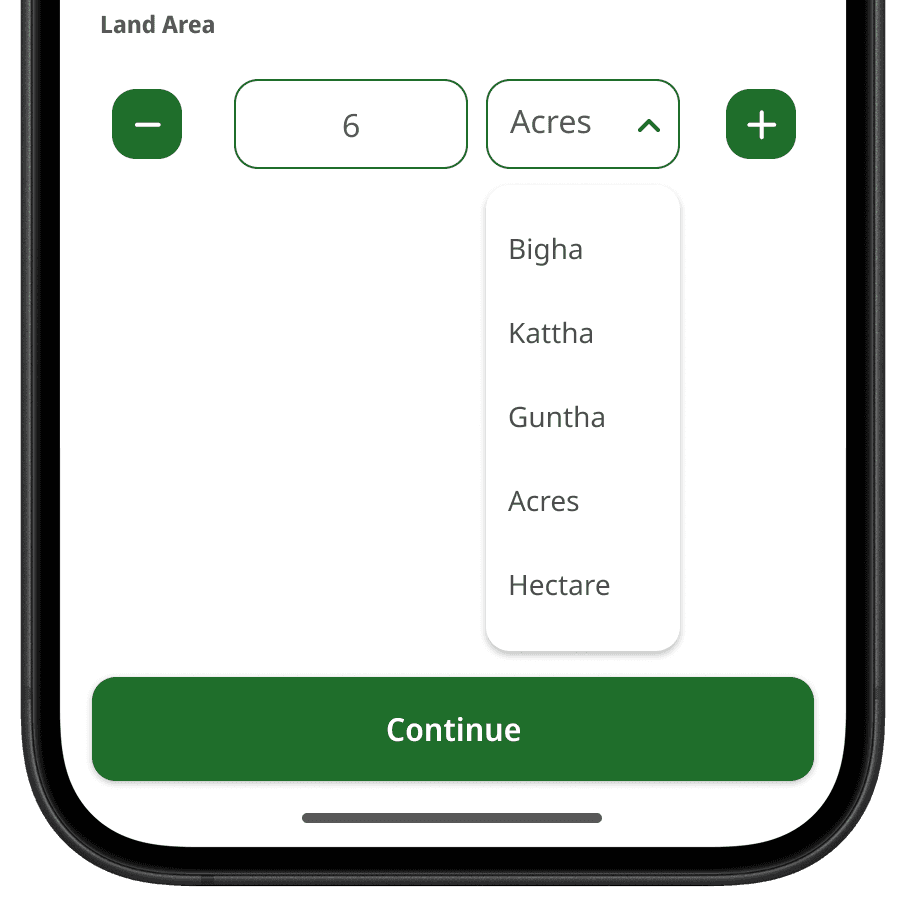
Area unit confusion
Added a unit selector to support different regional measurements.
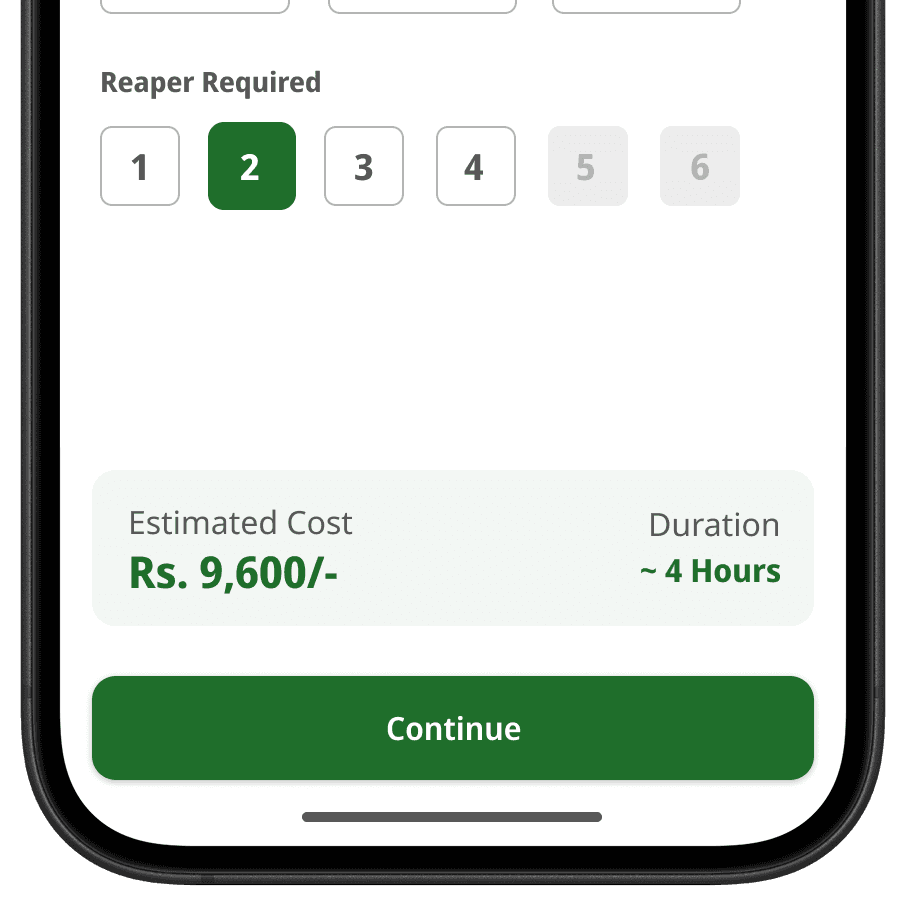
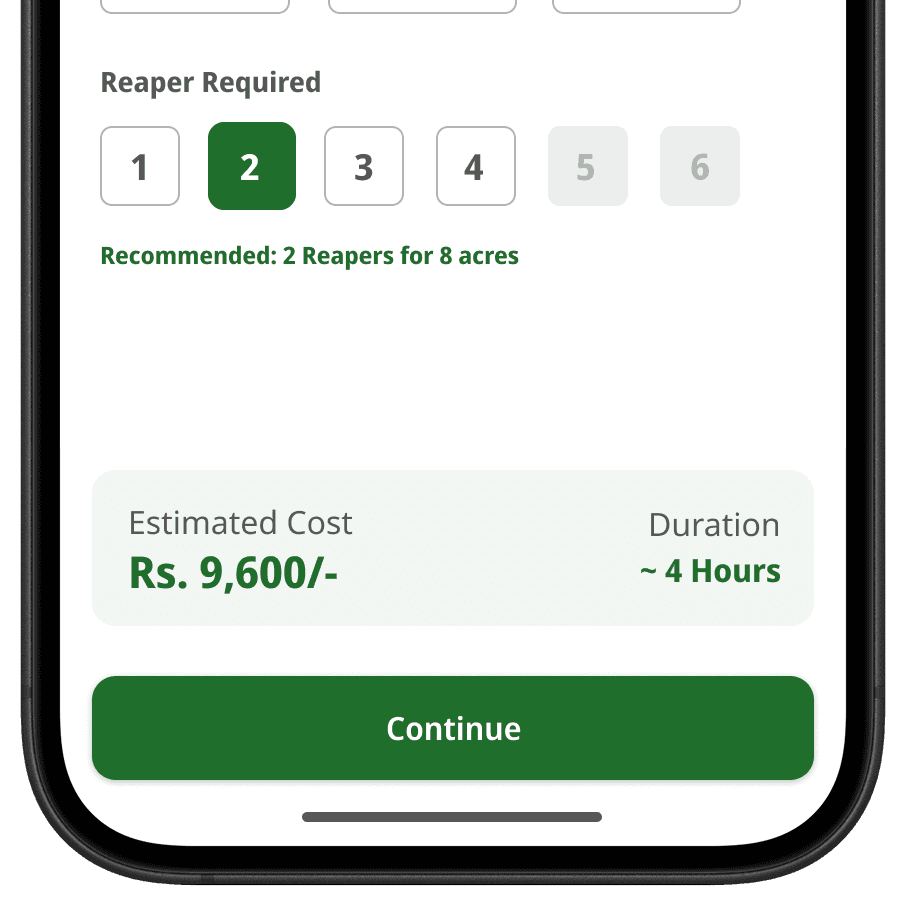
Machine Quantity Uncertainty
Provided recommended machine count based on land area.
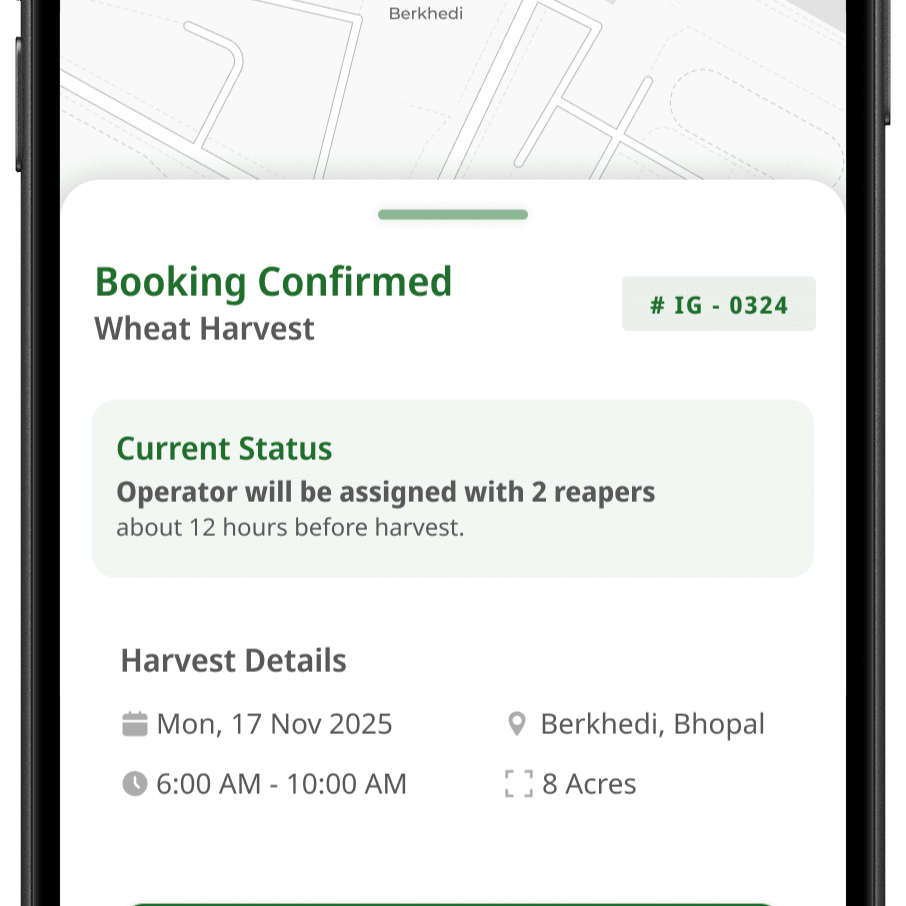
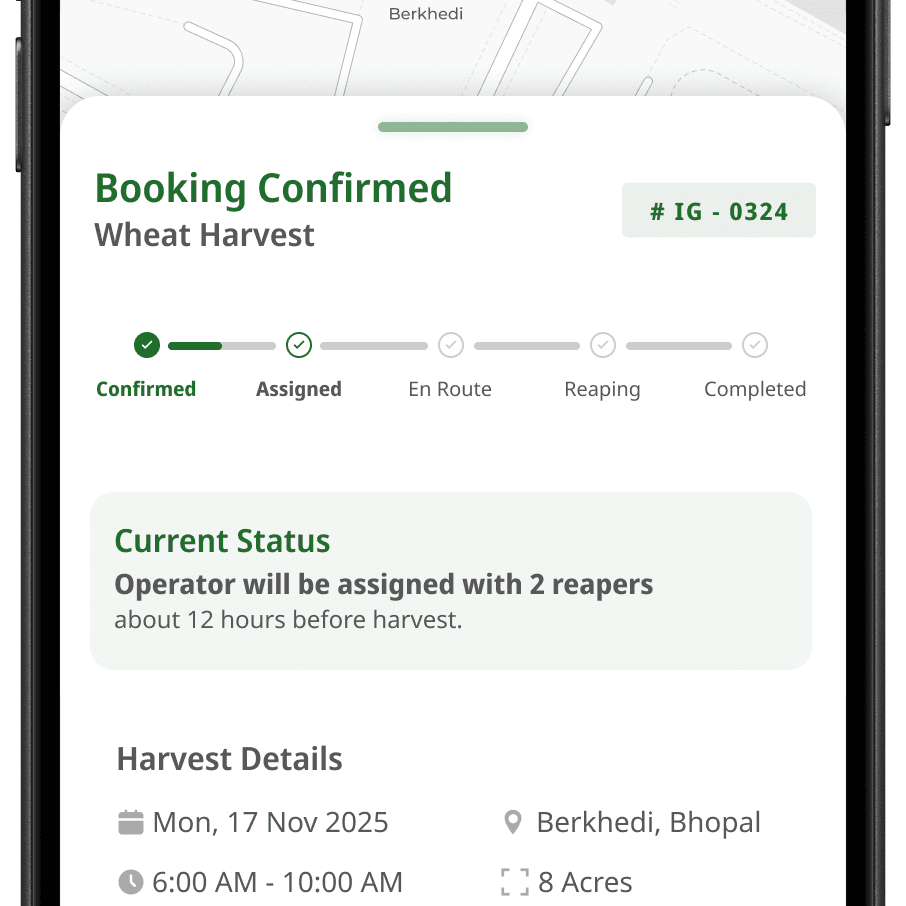
Lack of progress clarity
Introduced a visual tracker to show booking progress and next steps.
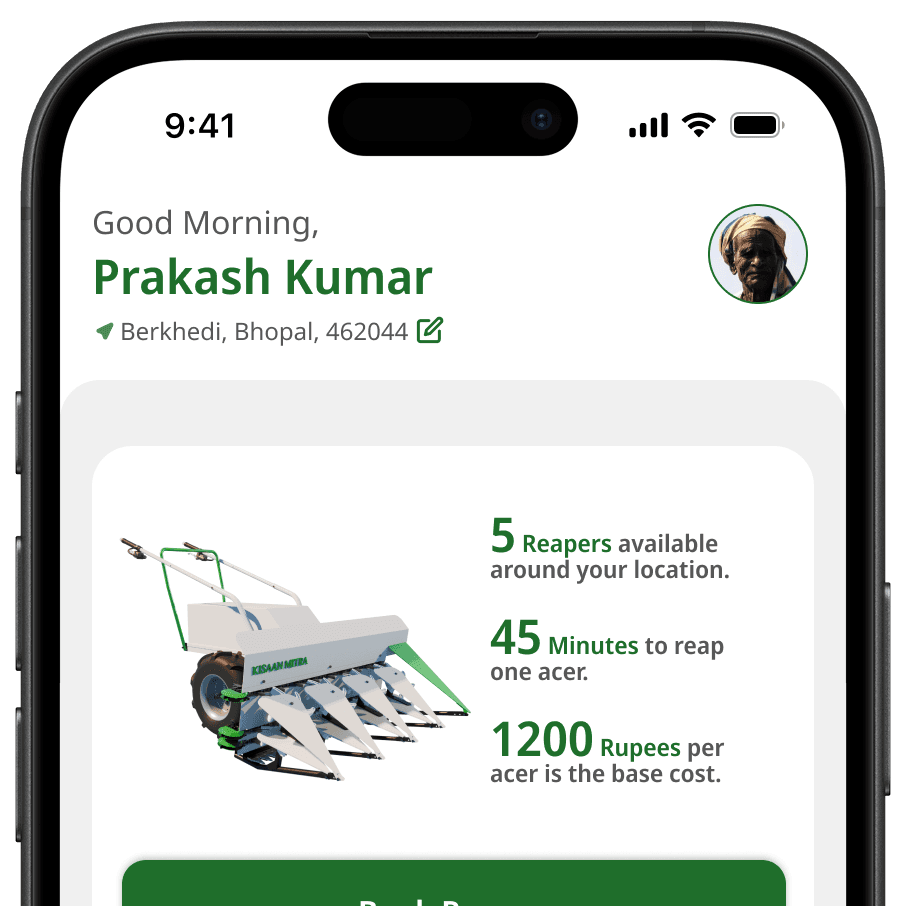
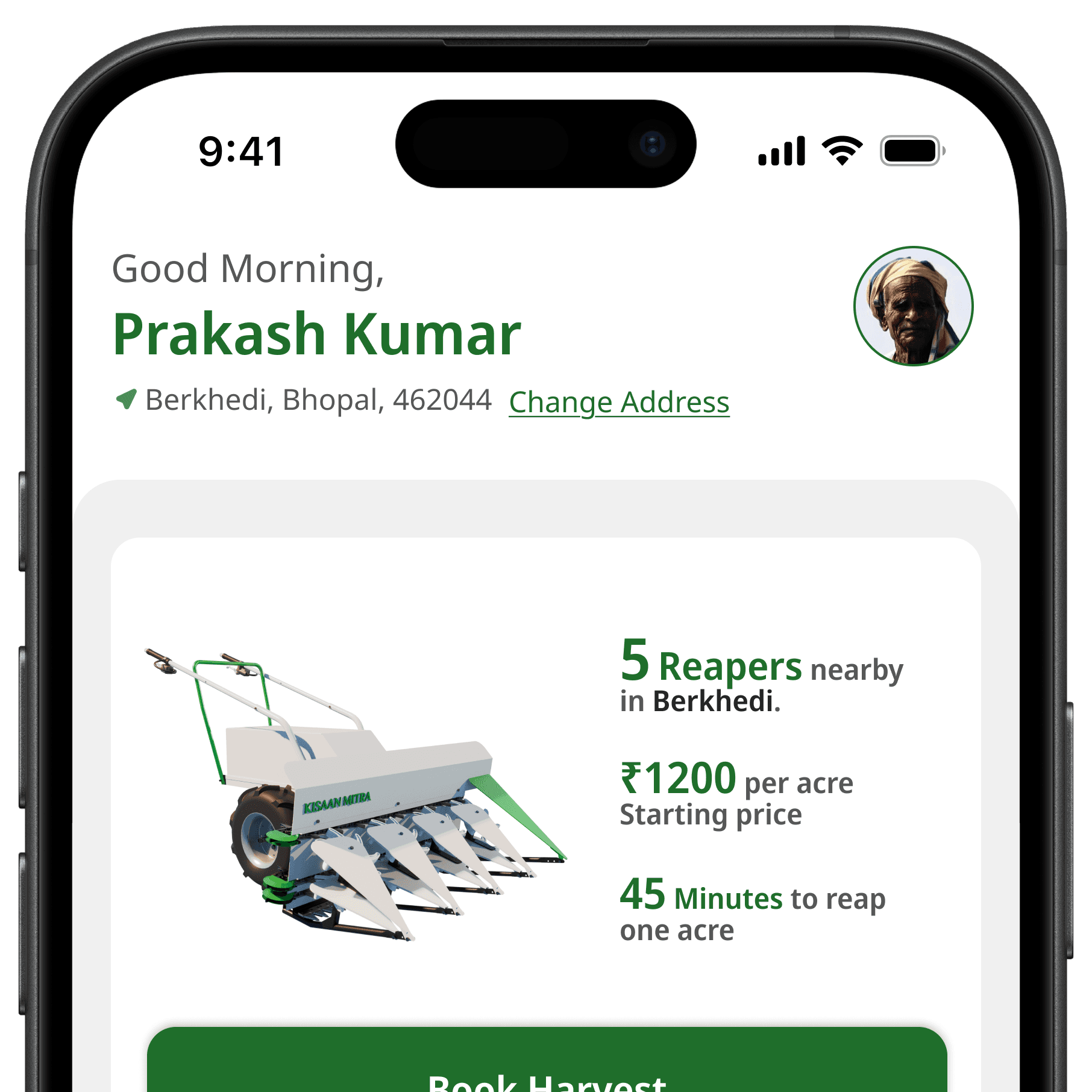
Icon Ambiguity
Replaced unclear icons with labeled and more intuitive actions.
"The solution bridges the gap between machine availability and farmer access by turning a fragmented process into a reliable system"
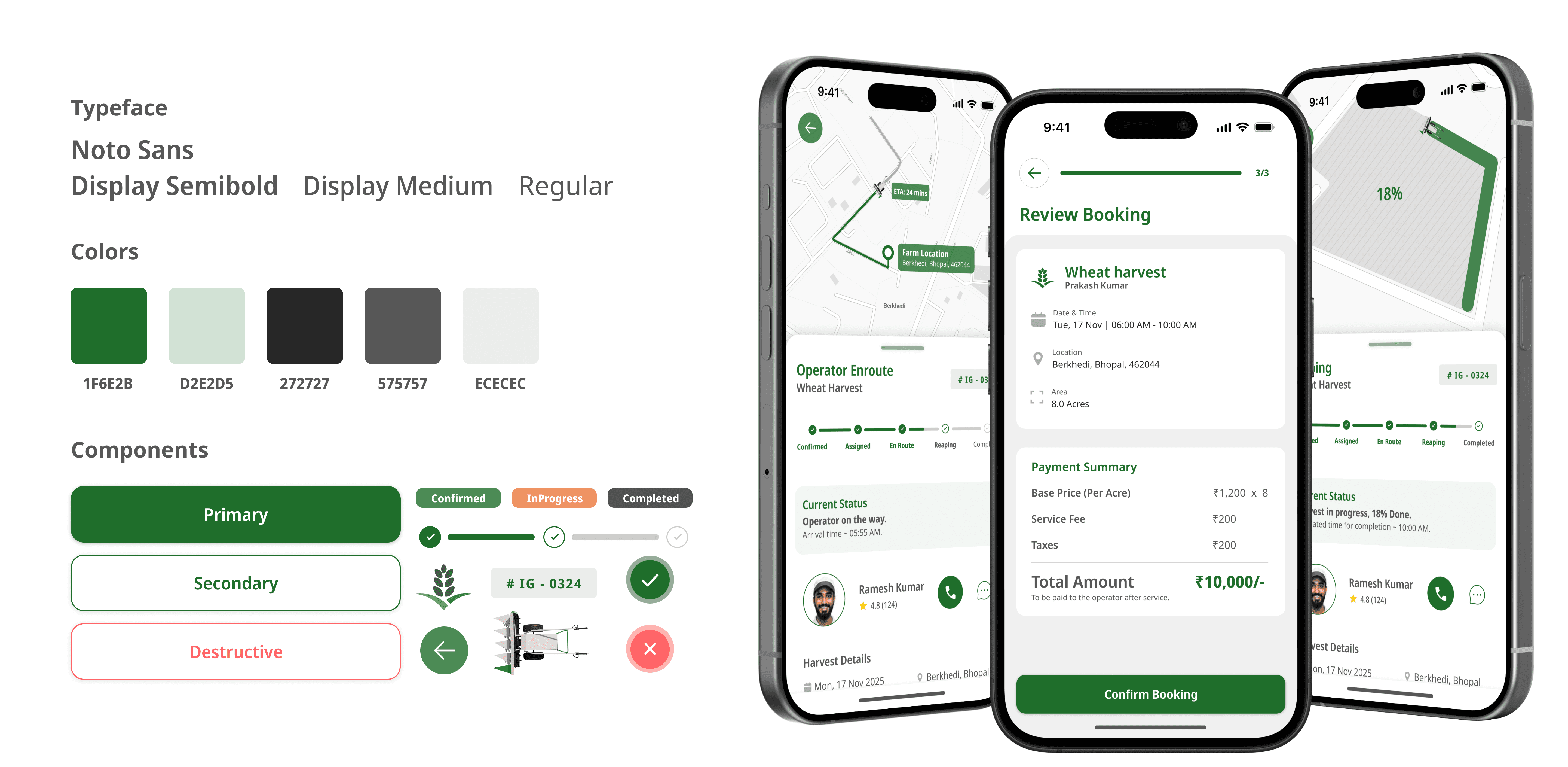
The solution transforms a fragmented, call driven process into a structured and reliable system.
It reduces coordination overhead, improves visibility, and ensures consistent execution across real world conditions.
The following outcomes show how each stakeholder’s challenges were addressed through the system.









"The system replaces fragmented coordination with a reliable flow connecting machine availability to farmer demand without breakdowns."
Designing Kisaan Mittra pushed me to think beyond screens and into system structure. The real challenge wasn’t building a booking interface it was replacing a coordination process built on calls, memory, and verbal agreements with something structured and reliable.
One of the hardest decisions was choosing constraint over flexibility. Open inputs felt natural, but they produced inconsistent data that broke execution downstream. By guiding farmers through fixed inputs and single‑purpose screens, the system gained reliability at the cost of some freedom a tradeoff that proved necessary.
Designing for low digital literacy also reshaped my approach. Instead of minimizing steps, I minimized decisions per screen. Each screen carries one responsibility, reducing ambiguity and input errors.
This project changed how I think about UX in operational systems. Good design here isn’t about fewer taps it’s about reducing uncertainty. When booking data is structured correctly at the start, the entire execution chain becomes predictable.
The interface became the surface of a much larger coordination model and that shift in thinking has stayed with me.